Personal Website vs. LinkedIn: Which One Gets You Hired?
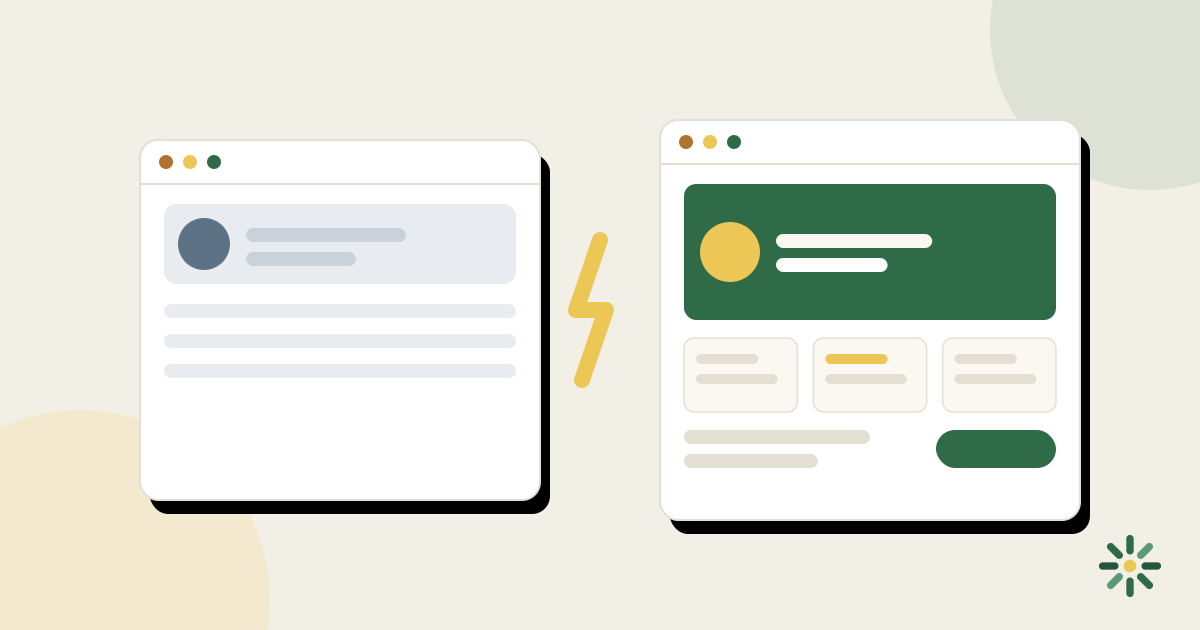
You don't have to choose. LinkedIn is where recruiters search; a personal website is where you win the tie-breaker. The two do different jobs, and the strongest candidates use both: LinkedIn for reach, a personal site for depth and control.
But "use both" is only useful advice if you know what each is actually for. Here's the honest comparison.
The short version
| Personal website | ||
|---|---|---|
| Who finds you there | Recruiters actively searching | People evaluating you after first contact |
| Format | Same template as everyone | Fully yours — design, structure, voice |
| Depth | Bullet points and short summaries | Case studies, projects, writing, personality |
| Ownership | LinkedIn's platform, LinkedIn's rules | Yours — your domain, your data |
| Competition on the page | Ads, "people also viewed," other profiles | Nothing. Just you |
| Effort to maintain | Low | Low-to-medium (one evening to build, small updates after) |
| Cost | Free | Free to modest (domain optional) |
What LinkedIn does better
Be honest about this: LinkedIn is not optional for most job searches.
- Recruiters live there. Sourcing tools search LinkedIn profiles by title, skill, and location. If you're not findable there, you're invisible to a large slice of the market.
- The network effect is the product. Referrals, old colleagues, recruiters reaching out — that graph of connections can't be replicated on a personal site.
- It's expected. A missing LinkedIn profile raises questions in a way a missing website doesn't.
If you have neither a good LinkedIn profile nor a website, fix LinkedIn first. It's the bigger surface area for being found.
What a personal website does better
Here's where the website earns its place — everything LinkedIn structurally can't do:
- You control the narrative. LinkedIn forces your story into its template: reverse-chronological jobs, standard sections, same layout as everyone else. Your site can lead with whatever makes you strongest — a flagship project, your writing, a reel.
- Depth without limits. A LinkedIn job entry gives you a few bullet points. A case study on your site can show the problem, your process, and the measurable result — the things that actually convince a hiring manager.
- No one else on the page. Your LinkedIn profile displays other candidates in the sidebar. Your website shows nothing you didn't put there.
- It signals initiative. A clean personal site says you take your professional presence seriously — before anyone reads a word.
- It's yours. Platforms change their algorithms, their layouts, and their terms. Your domain and your site persist through every job search, on your rules.
When two candidates look similar on paper, the one with a sharp personal site gives the hiring manager more reasons to say yes. That's the tie-breaker effect, and it's the core case for having one. (More on that in do you actually need a personal website?)
How to make them work together
Don't build two disconnected profiles. Wire them into one funnel:
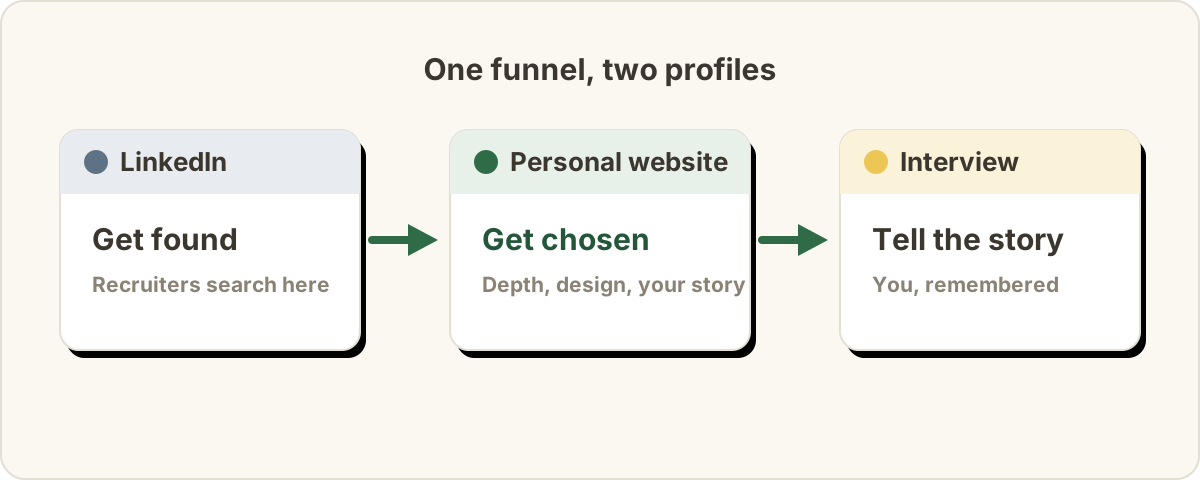
- LinkedIn is the top of the funnel. Keep the headline sharp, the experience current, and the skills accurate — that's what search finds.
- Put your website link in your LinkedIn profile (the website field, and mention it in your About section). Do the same on your resume and email signature.
- The website is the bottom of the funnel. When a recruiter moves from "found you" to "evaluating you," your site is where the depth lives: projects, case studies, story, personality.
- Keep the facts consistent. Titles and dates should match between resume, LinkedIn, and site. Mismatches read as carelessness.
One rhythm that works: update LinkedIn when something changes; update your website when you have something to show.
"But maintaining a website sounds like work"
This objection used to be fair. Building a site meant either learning a website builder for a weekend or paying someone — and then template regret set in and changing the design meant rebuilding everything.
It's why we built Unfold the way we did: you upload the resume you already maintain, and the AI drafts the entire site — structure, sections, and copy — in about a minute. Your content stays separate from the design, so you can switch between 18 templates instantly, and updating the site later is editing a few fields, not renovating a layout. Here's how the resume-to-website flow works. Free to start.
Common questions
Do recruiters actually visit personal websites?
When one is linked, it routinely gets clicked during evaluation — especially for design, engineering, writing, and marketing roles where work samples matter. Recruiters won't go hunting for a site that isn't linked, though. Put the link everywhere your name appears.
I'm not a designer or developer. Is a website still worth it?
Yes — the tie-breaker effect isn't field-specific. A project manager's site with three crisp outcome stories does the same job a designer's portfolio does. If your field is skeptical of flash, keep the site plain and let the content carry it.
Should my website just copy my LinkedIn content?
No. If the site is a worse-formatted copy of LinkedIn, it adds nothing. Lead with what LinkedIn can't hold: full project stories, selected work, your voice. Start with what to put on a personal website.
Which should I send with my application?
Both, in their places: LinkedIn URL where the form asks for it, website on the resume header. If the form has one link field, use the website — the recruiter can reach LinkedIn from there.